
PUC Certificate
Step 1: Visit nearest PUC centre (petrol pumps or RTO-approved centres) · Step 2: Hand over your vehicle to the technician · Step 3: Exhaust emissions get tested for CO and HC levels · Step 4: Pay Rs 50–100 fee · Step 5: Collect your PUC Certificate on the spot
What is a PUC Certificate
A PUC certificate is a government-mandated document that confirms your vehicle's emissions are within the permissible limits set under Rule 115 of the Central Motor Vehicles Rules, 1989. It's issued by authorised emission testing centres after your vehicle passes a physical exhaust test.
Why It Matters (Beyond Just Avoiding Fines)
- Legal requirement. It's mandatory under the Motor Vehicles Act, 1988. You must carry it at all times while driving, just like your driving licence, RC, and insurance.
- Vehicle health indicator. A failed PUC test often signals underlying engine problems like a worn-out catalytic converter, misfiring spark plugs, or fuel injection issues. Catching these early can save you expensive repairs later.
- Environmental responsibility. Vehicular emissions are one of the biggest contributors to air pollution in Indian cities. A PUC check ensures your vehicle isn't adding more than its fair share to the problem.
What the PUC Certificate Contains
A valid PUC certificate (also called Form 59) includes the following information:
- Certificate serial number (unique identifier for the test)
- Vehicle registration number
- Vehicle make, model, and fuel type
- Date of the emission test
- Expiry date of the certificate
- Emission test readings (actual CO, HC, smoke density levels recorded during the test)
- Permissible limits for comparison
- PUC centre details (name, address, licence number of the testing centre)
Who Needs a PUC Certificate
Every vehicle with an internal combustion engine. This includes:
- Two-wheelers (bikes, scooters)
- Three-wheelers (autos)
- Four-wheelers (cars, SUVs, vans)
- Commercial vehicles (trucks, buses, tempos)
- Vehicles running on petrol, diesel, CNG, or LPG
- BS4, BS6, and all older BS-compliant vehicles
PUC Validity
The validity depends on your vehicle's age and which Bharat Stage norms it meets:
| Vehicle Type | Validity |
|---|---|
| New vehicles (first year from registration) | 1 year |
| BS4 and BS6 compliant vehicles (after first year) | 12 months |
| Older vehicles (pre-BS4) | 6 months |
| Vehicles with borderline emission readings | 3 months (at the testing centre's discretion) |
For new vehicles, the dealer usually arranges the first PUC certificate at the time of purchase. After the first year, you need to get it renewed at an authorised testing centre.
How to Get a PUC Certificate
The process is straightforward and takes less than 10 minutes. You cannot get a new PUC certificate online. The physical emission test is mandatory. Here's how it works:
Step 1: Find an Authorised PUC Centre
PUC testing centres are available at most petrol pumps across India. You can also find them at standalone testing centres and some RTO offices. To find one near you:
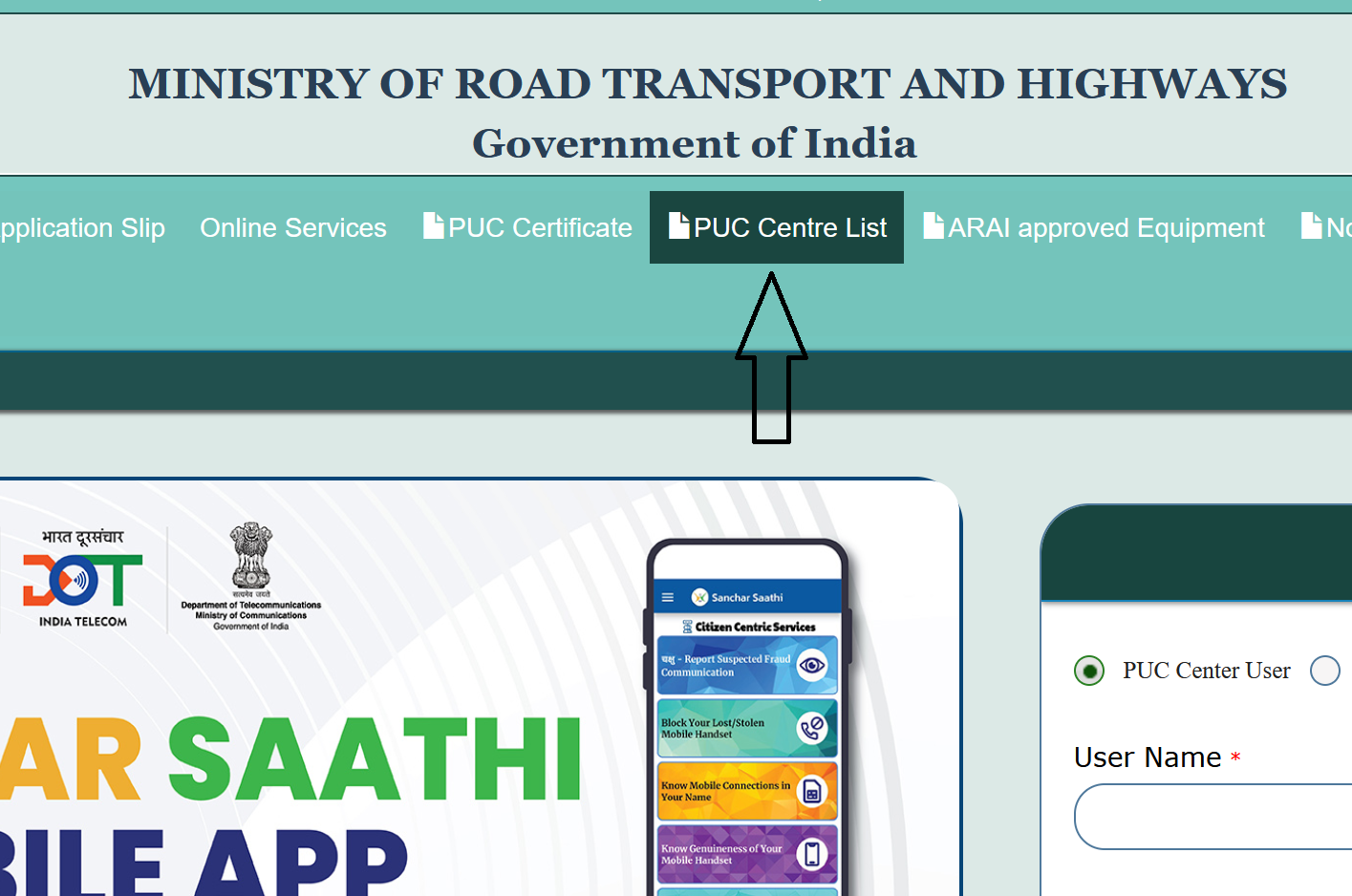
- Visit puc.parivahan.gov.in
- Select "PUC Centre List" from the menu
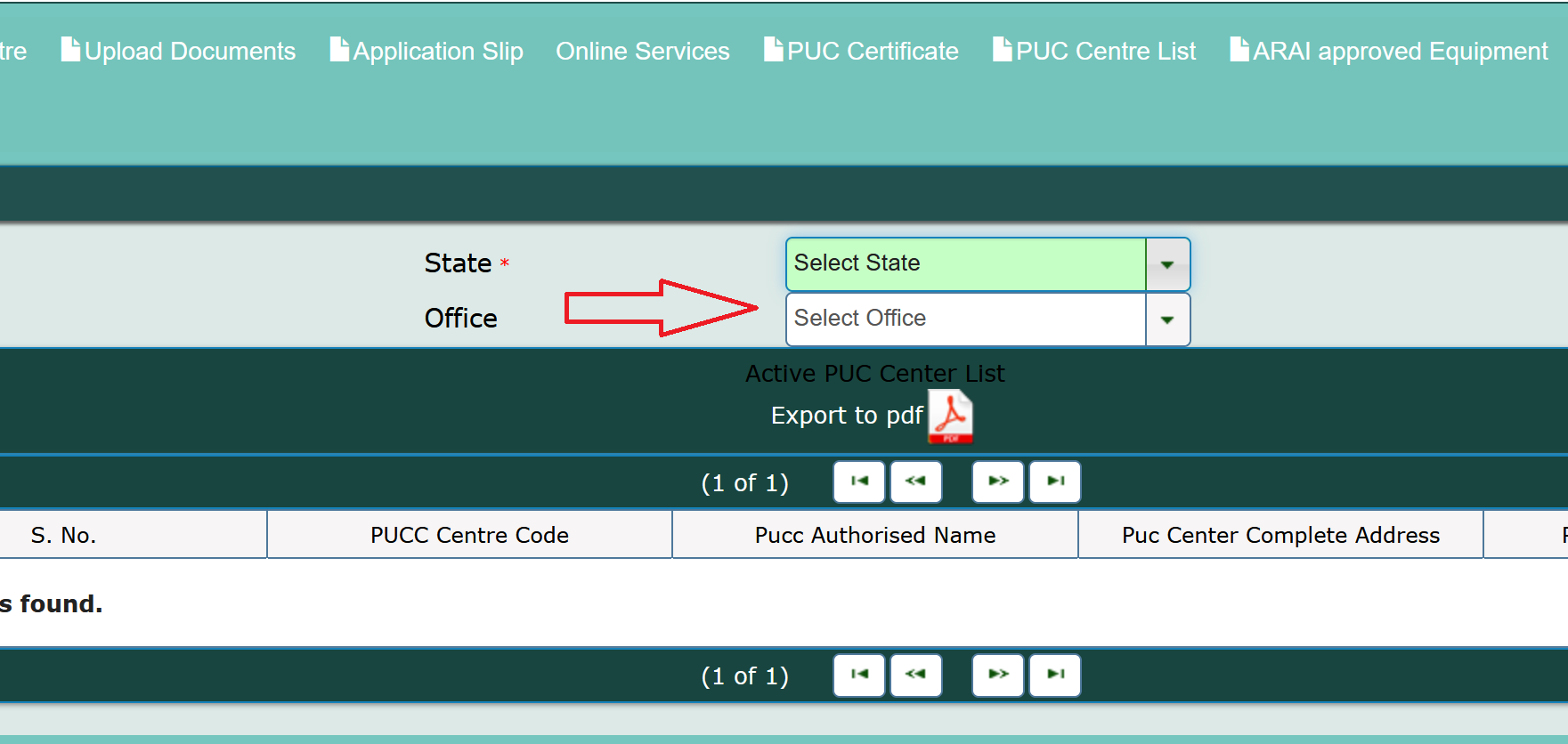
- Choose your state from the dropdown
- Browse the list of active, authorised centres in your area
No appointment is needed. You can walk in at any testing centre.
Step 2: Take Your Vehicle for Testing
Drive your vehicle to the centre. The only document you need is your Registration Certificate (RC), either physical or digital. No other paperwork is required.
Step 3: The Emission Test
The testing centre operator inserts a gas analyser probe into your vehicle's exhaust pipe. Here's what happens depending on your fuel type:
- For petrol/CNG/LPG vehicles: The engine is kept idling (no acceleration). A single reading is taken. The machine measures Carbon Monoxide (CO) and Hydrocarbon (HC) levels.
- For diesel vehicles: The accelerator is fully pressed and released. This process is repeated five times. The average of all five readings becomes the final result. The machine measures smoke density/opacity.
The results appear on the screen within seconds.
Step 4: Get Your Certificate
If your vehicle's emissions are within the permissible limits, the centre issues a printed PUC certificate on the spot. Pay the fee, collect your certificate, and you're done.
If your vehicle fails the test, the centre issues a rejection slip. You'll need to get your vehicle serviced and repaired, then come back for a retest.
Emission Limits
The permissible emission levels for the PUC test are set under Rule 115 of the Central Motor Vehicles Rules. Here are the current limits:
Petrol/CNG/LPG Vehicles
| Vehicle Type | CO (%) | HC (ppm) |
|---|---|---|
| 2/3-wheelers (manufactured before March 2000) | 4.5 | 9,000 |
| 2-wheelers, 2-stroke (March 2000 to March 2010) | 3.5 | 6,000 |
| 2-wheelers, 4-stroke (after March 2000) | 3.5 | 4,500 |
| 4-wheelers (pre-BS2 norms) | 3.0 | 1,500 |
| 4-wheelers (BS2, BS3, and later norms) | 0.5 | 750 |
Diesel Vehicles
| Vehicle Type | Smoke Density (HSU) |
|---|---|
| Pre-BS4 vehicles | 65 |
| BS4 and later vehicles | 50 |
If your readings are above these limits, the PUC certificate won't be issued.
PUC Certificate Fees
PUC testing charges are nominal and vary slightly by state, vehicle type, and fuel type. Here's the general range:
| Vehicle/Fuel Type | Approximate Fee |
|---|---|
| Petrol/CNG/LPG two-wheelers and three-wheelers | ₹60 to ₹80 |
| Petrol/CNG/LPG four-wheelers | ₹80 to ₹110 |
| Diesel vehicles (all types) | ₹100 to ₹150 |
- For reference, Delhi revised its PUC fees in 2024 after 13 years. The current Delhi rates are: ₹80 for petrol/CNG two-wheelers and three-wheelers, ₹110 for petrol/CNG four-wheelers, and ₹140 for diesel vehicles.
- Maharashtra charges ₹50 for two-wheelers, ₹100 for petrol three-wheelers, ₹125 for CNG/petrol/LPG four-wheelers, and ₹150 for diesel vehicles.
Download, Check Status Of PUC Certificate Online
While you can't get a new PUC certificate online (the physical test is always required), you can download, check, or reprint an existing valid PUC certificate from the Parivahan portal. This is useful if you've lost the physical copy or want a digital backup.
Steps to Download
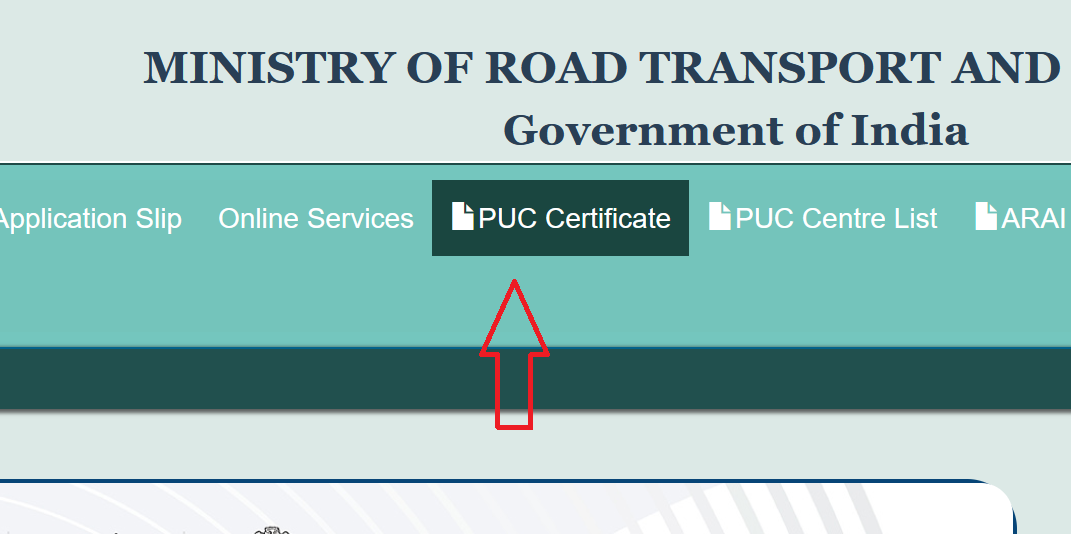
- Visit the official PUC portal at puc.parivahan.gov.in
- Click on "PUC Certificate" from the menu
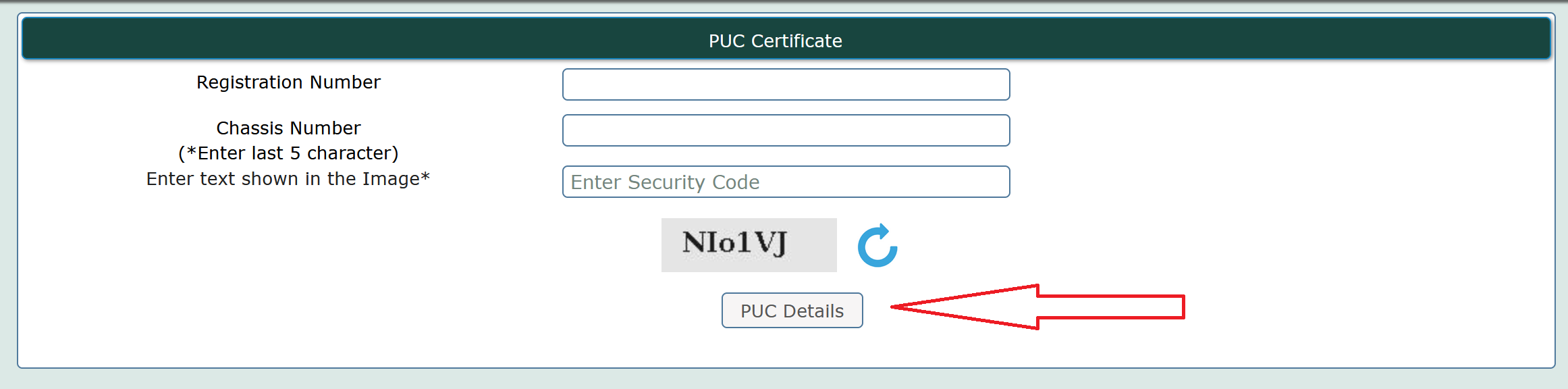
- Enter your vehicle registration number
- Enter the last 5 digits of your chassis number
- Enter the security captcha code
- Click "PUC Details"
The portal will show you:
- Whether your PUC is valid or expired
- The expiry date
- The emission test readings from your last test
- PUC serial number
- Testing centre details
You can print or save it as a PDF. If it shows as expired, you need to visit a testing centre in person for renewal. There's no way to extend or renew a PUC certificate online.
The digital certificate downloaded from the Parivahan portal is legally valid and can be shown to traffic police or RTO officials. You can also store it on DigiLocker or the mParivahan app for easy access.
Renew Your PUC Certificate
Renewal is exactly the same process as getting a new one. There's no separate renewal procedure. You simply take your vehicle to any authorised PUC testing centre, get the emission test done again, and if it passes, you get a fresh certificate with a new validity period.
You don't need the old certificate to get a new one. Just your vehicle and your RC.
When to renew: Ideally, get it done a few days before your current PUC expires. Don't wait for it to lapse. Some states issue fines immediately after expiry, and automated e-challan systems don't care about grace periods.
What Happens if Your Vehicle Fails the PUC Test
If the emission readings exceed the permissible limits, the testing centre will:
- Not issue a PUC certificate
- Issue a rejection slip documenting the failed readings
- Report the vehicle's registration number to the RTO within 24 hours (this is mandatory)
You need to get your vehicle repaired and serviced to bring emissions within limits, and then go back for a retest. Common reasons vehicles fail include a faulty catalytic converter, worn-out spark plugs, poor fuel quality, clogged air filter, engine timing issues, or a malfunctioning oxygen sensor.
In serious cases of non-compliance, the RTO has the power to suspend your Registration Certificate (RC) and any permits until you obtain a valid PUC certificate.
Penalties for Not Having a Valid PUC
Under Section 190(2) of the Motor Vehicles Act, the penalties are:
| Offence | Fine |
|---|---|
| First offence (no valid PUC) | ₹1,000 |
| Subsequent offences | ₹2,000 |
Some states may impose higher penalties. In cities with automated enforcement, you may receive an e-challan without being stopped by a traffic officer. The challan gets linked to your vehicle registration number, and you'll need to clear it before renewing your RC or insurance. Beyond fines, repeated non-compliance can lead to RC suspension by the RTO.
Where to Get a PUC Certificate
PUC testing centres are widely available across India. You can find them at:
- Petrol pumps (most major petrol pumps have PUC testing kiosks)
- Standalone authorised testing centres
- Some RTO offices
- Authorised automobile workshops (in some states)
The Testing Process Explained
For those who've never gotten a PUC test done, here's exactly what happens at the centre:
Common Reasons Vehicles Fail the PUC Test
Worn-out catalytic converter.
This is the most common reason for high CO readings in petrol vehicles. If it's degraded, it can't convert harmful gases effectively. Replacement costs vary, but it's essential for passing PUC.
Dirty or clogged air filter.
A clogged air filter restricts airflow to the engine, causing incomplete combustion and higher emissions. Replacing or cleaning it is cheap and often solves the problem.
Faulty spark plugs.
Worn spark plugs cause misfires, leading to unburnt fuel in the exhaust. Replacing them is one of the simplest fixes.
Old engine oil.
Degraded oil increases friction and affects combustion efficiency. Regular oil changes help keep emissions low.
Poor fuel quality.
Using adulterated fuel can spike emissions significantly. Stick to reputable fuel stations.
Fuel injector problems.
Dirty or malfunctioning fuel injectors cause uneven fuel delivery, leading to incomplete combustion.
Engine timing issues.
If the ignition timing is off, combustion won't be efficient, and emissions go up.